Tokyo Gas Secures Design Approval for 15 MW Floating Offshore Wind System in Japan
2026/10/15
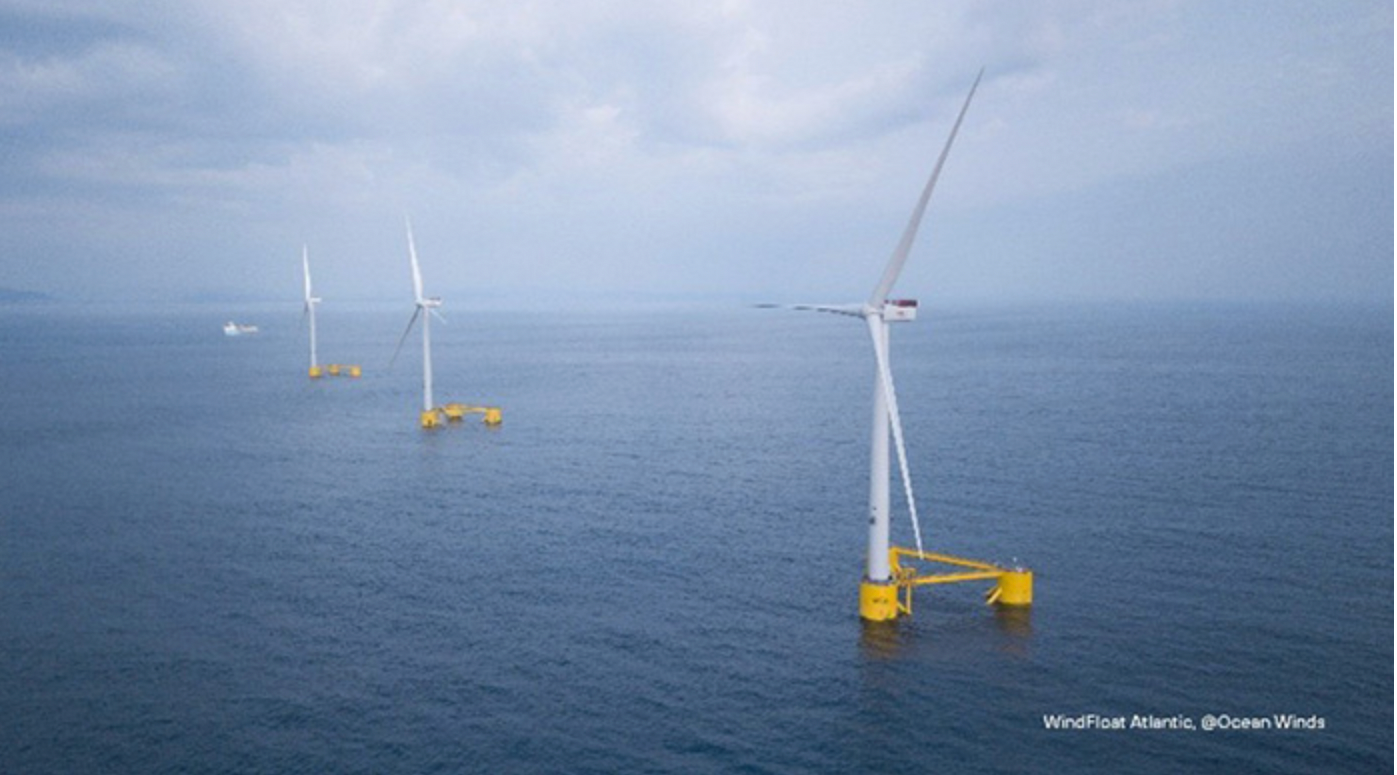
The WindFloat Atlantic floating offshore wind farm, which uses Principle Power’s floating platform technology. (Photo:Tokyo Gas)
Tokyo Gas and U.S.-based Principle Power have received approval in principle (AiP) from classification society ClassNK for a floating offshore wind system designed to support a 15-megawatt-class turbine in Japanese waters, Tokyo Gas said on October 13.
The approval marks a step toward adapting floating wind technology to Japan’s demanding wind and sea conditions, as the industry works to address costs and build the domestic supply chain needed for commercial deployment.
The design uses Principle Power’s WindFloat® TC floating foundation, a semisubmersible platform with a central column that accommodates a 15 MW-class turbine. Tokyo Gas, which holds an equity stake in Principle Power, is combining the U.S. company’s floating wind technology with its own engineering expertise to meet Japanese regulations, technical standards, and site conditions.
Principle Power’s technology controls the orientation of the turbine and floating foundation to optimize power generation. Its floating platforms are already deployed at several commercially operating offshore wind farms in Europe.
To assess the Japanese design, Tokyo Gas conducted coupled analyses of the turbine, floating foundation, and mooring system, evaluating how the components interact under environmental loads. The company also carried out basin tests replicating wind, wave, and current conditions to validate its analytical models and design methods.
AiP involves an independent review of a preliminary design against applicable rules and standards to assess its technical feasibility and safety. It does not constitute final certification of a commercial installation or authorization to begin operations.
Japan’s extensive deepwater areas make floating foundations an important option for expanding offshore wind development. Commercial deployment, however, will require lower costs and a stronger domestic network of suppliers and service providers.
Alongside its engineering work, Tokyo Gas is working to develop a Japanese supply chain for installation, operations, and maintenance. The company aims to establish a floating foundation design suited to local conditions while improving technical reliability and safety.