Quantum Dot Solar Cells Move Closer to Commercialization with Low-Cost Printable Ink Technology
2026/7/3
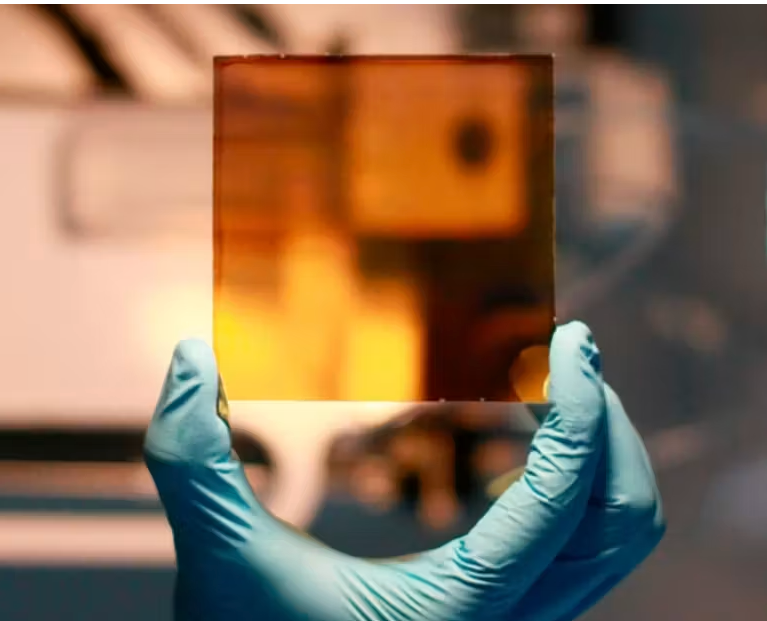
Photo: Prototype quantum dot solar cells are thin and highly flexible, with potential applications in curved-surface installations and flexible electronic devices.
Quantum dot solar cells, a next-generation photovoltaic technology that gained global attention through the 2023 Nobel Prize in Chemistry, have taken a significant step toward commercialization.
Researchers at the University of Electro-Communications (UEC) in Tokyo announced the development of a new ink fabrication method that enables uniform film formation over large areas, addressing one of the major obstacles to the practical use of quantum dot solar cells. The findings were published in the British scientific journal Nature Energy.
Quantum dot solar cells generate electricity using semiconductor nanoparticles only a few nanometers in size. By adjusting the size of the particles, researchers can control which wavelengths of light are absorbed, allowing more efficient use of the solar spectrum.
The technology is considered highly promising because its theoretical energy conversion efficiency exceeds 40%, potentially surpassing standalone silicon and perovskite solar cells.
However, commercialization has been hindered by difficulties in maintaining stable quantum dot inks and achieving uniform coating across large surfaces.
Stable ink for large-area printing
The UEC research team improved ink stability by introducing negative charges on the surface of the quantum dots, preventing the particles from aggregating.
According to the researchers, the usable lifetime of the ink was extended from around 30 minutes to more than 30 days, while also eliminating the need for repeated coating and drying cycles during fabrication.
The breakthrough could substantially reduce manufacturing costs.
The team estimates that the new ink can be produced for approximately 800 yen per gram (about US$5.5), roughly one-twentieth of the previous cost. Based on power output, the manufacturing cost could fall to below 9 yen per watt, making it competitive with, or potentially cheaper than, conventional silicon solar cells.
Prototype demonstrates improved performance
In prototype tests, the researchers fabricated a cell with a coated area of about 13 square centimeters, roughly 300 times larger than previous samples, while maintaining a power conversion efficiency above 10%.
The device also retained more than 90% of its initial performance after over 1,200 hours of continuous operation, indicating progress in operational stability.
The prototype is thin, lightweight, and highly flexible, making it suitable for curved surfaces and flexible electronic devices.
Competing with perovskite technology
Quantum dot solar cells are often compared with perovskite solar cells, which are currently advancing toward mass production as flexible thin-film photovoltaics.
Both technologies can be manufactured using printing processes, but their fabrication principles differ significantly.
Perovskite solar cells require a post-deposition crystal growth process, demanding strict control of temperature and humidity during manufacturing. Quantum dots, by contrast, are already crystalline at the ink stage, meaning the photoactive layer can be formed simply through coating, offering greater manufacturing flexibility.
This characteristic opens the door to applications such as:
- Power-generating windows
- Building-integrated photovoltaics (BIPV)
- Wearable electronics and smart textiles
Tandem solar cell potential
Another advantage of quantum dots is their ability to absorb near-infrared wavelengths by controlling particle size.
This makes them attractive for tandem solar cells combined with silicon or perovskite technologies, where different layers capture different portions of the solar spectrum to achieve higher overall efficiencies.
Commercialization still years away
The research group aims to establish the core technologies required for practical deployment within about five years and targets commercialization in roughly a decade.
Its current goal is to increase conversion efficiency from around 10% to approximately 20%.
The researchers acknowledge that competition in next-generation solar technologies is intensifying. China has significantly expanded investment in advanced photovoltaic research and currently leads the world in both scientific publications and technology development related to quantum dot solar cells, while also building manufacturing capacity and supply chains.
Although perovskite solar cells have already entered the early commercialization phase, quantum dot solar cells remain largely in the research and development stage.
Still, the latest results provide a clearer pathway toward solving two of the technology's most persistent challenges: large-scale manufacturability and production cost.
Further improvements in conversion efficiency, long-term durability, and large-area manufacturing techniques will be crucial for widespread adoption.
As the global race for next-generation solar technologies accelerates, quantum dot solar cells are emerging alongside perovskites as a potentially important contender in the future photovoltaic market.
Sources: NIKKEI, University of Electro-Communications, Nature Energy